
Jan Matejko - Stańczyk

Jan Matejko is undoubtedly one of the greatest painters to ever come out of Poland. Yet at the same time, he is an artist who seems to have always divided opinion amongst art lovers and critics alike.
For admirers, his dramatic and theatrical painting style is perfectly befitting the battle scenes and other historical subjects he so often focuses on.
Whereas for critics (both now, and in his own lifetime) - there is often an accusation of his work being a little too bombastic. Or that Matejko aimed too much for a kind of “Baroque” energy in his work . . . a style of art which had outdated for more than 200 years by the time our artist was in his own prime.
_
So, as always, it is not my place to argue with either side here.
However, if there is one work in Metejko’s entire oeuvre which I think we can almost universally agree on as being his standout masterpiece . . . then the painting we are focussing on here today is certainly the one I would choose!
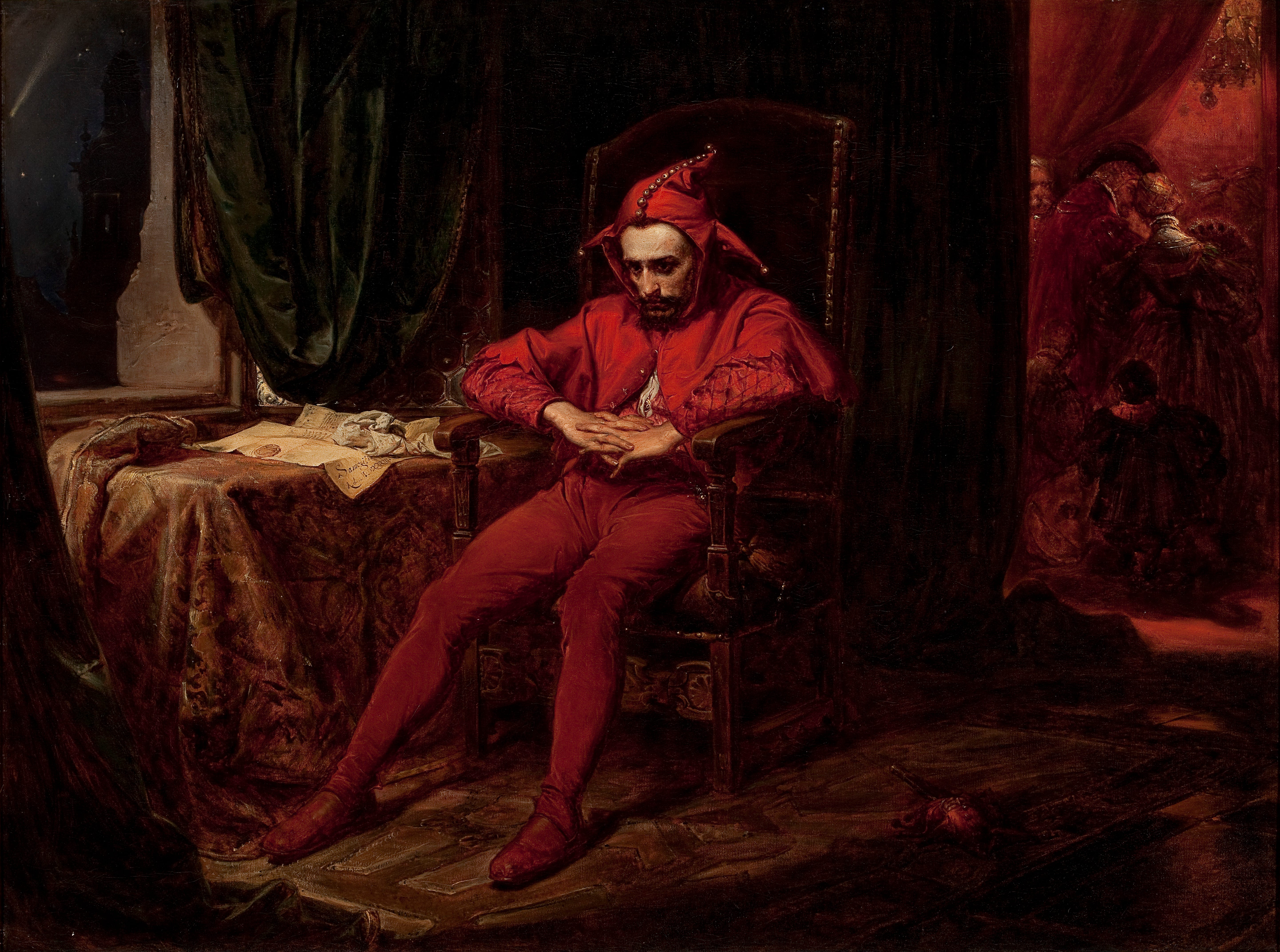
The full title of this extraordinary work is “Stańczyk during a ball at the court of Queen Bona in the face of the loss of Smolensk”.
But quite understandably, this has been shorted over the years simply to Stańczyk.
And for those of you who may not know, Stańczyk himself was a real life figure - famous for being one of the most popular court Jesters in Poland during the early to mid 16th century.
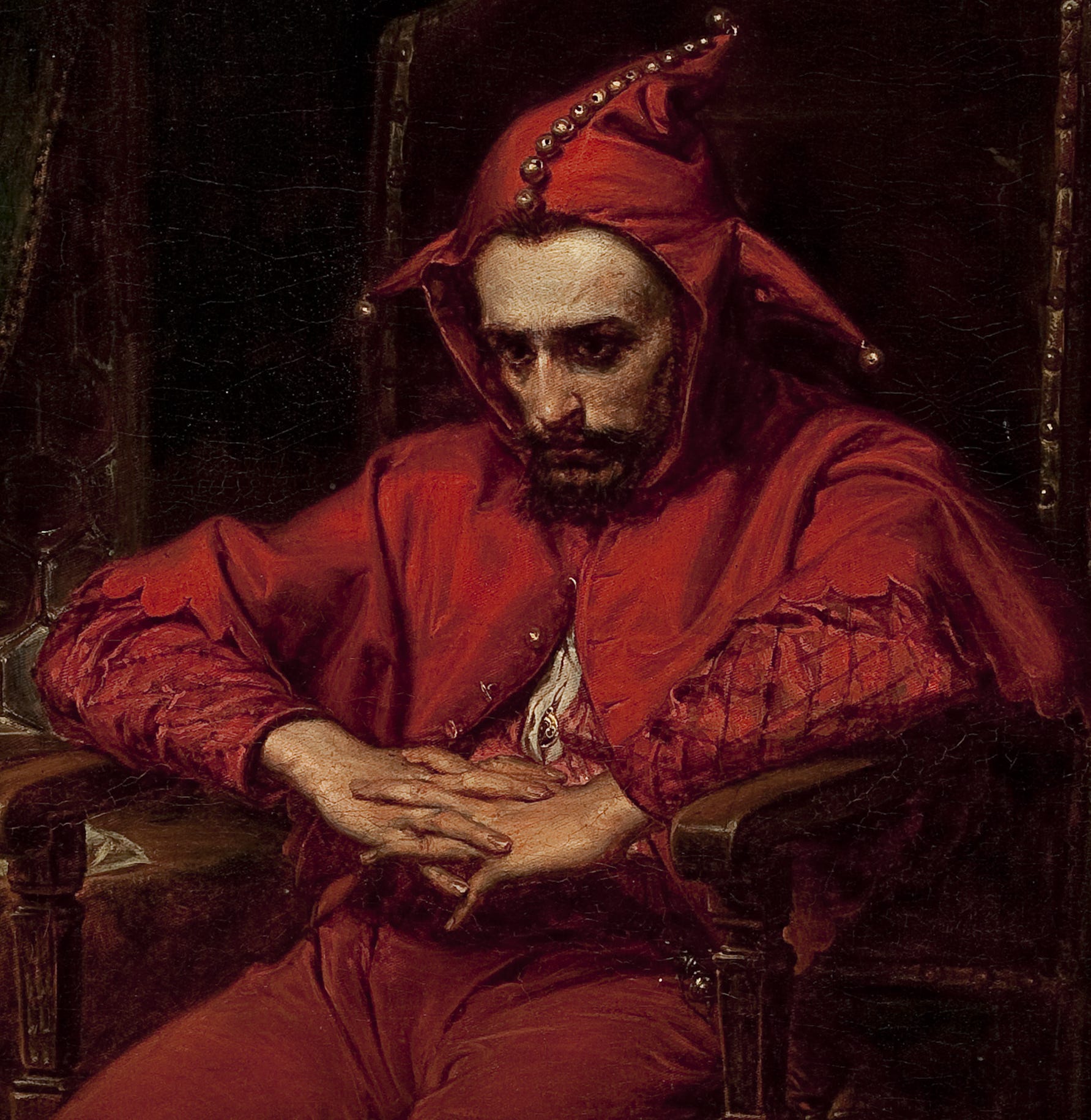
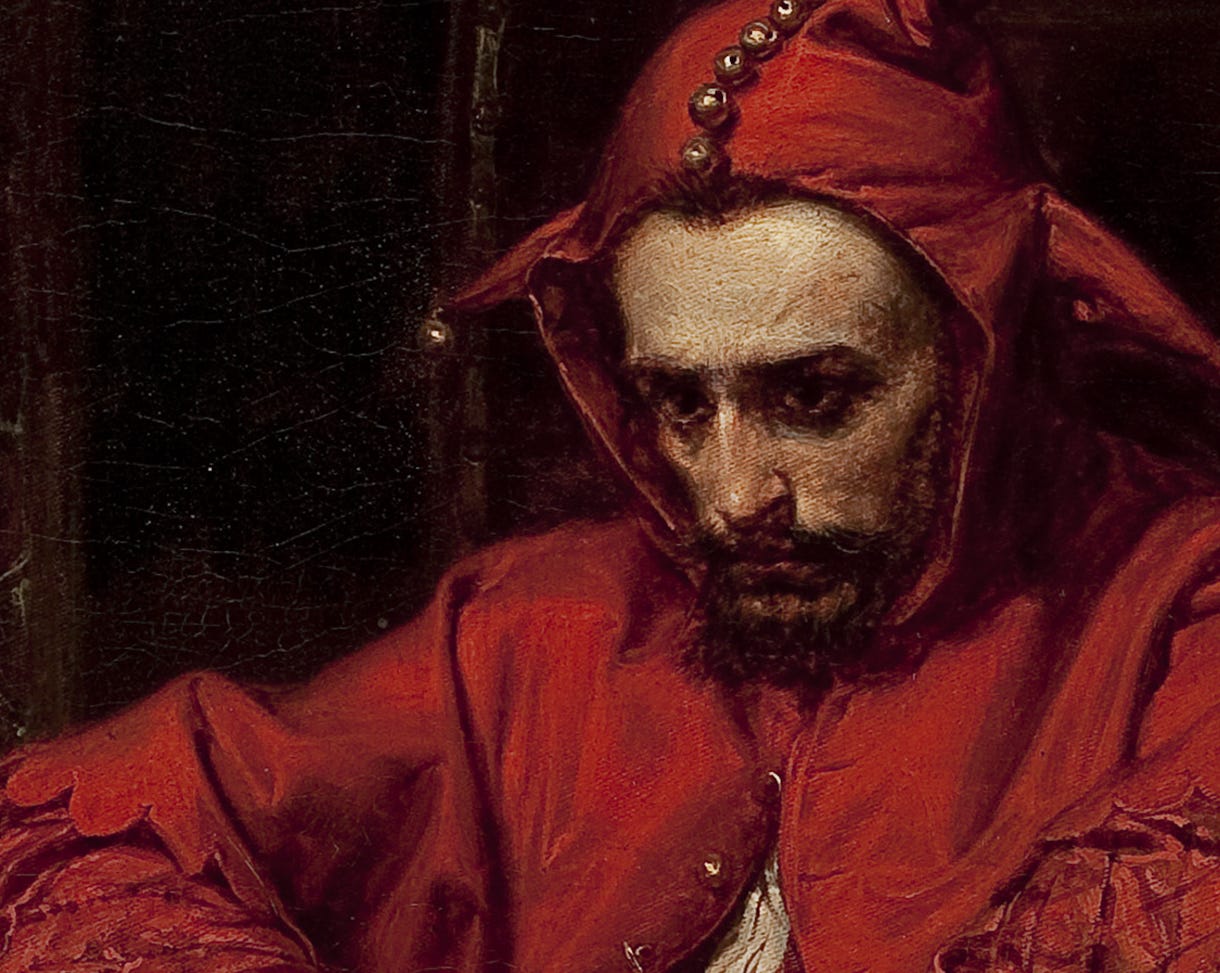
Yet as we can see here, our artist has captured the portrait of this great entertainer in a manner which completely contradicts his Jesters outfit.
The underlying story here is that Stańczyk has just opened a letter (seen on the table next to him), informing him that his homeland of Smolensk has just fallen into enemy hands during the Muscovite–Lithuanian War.
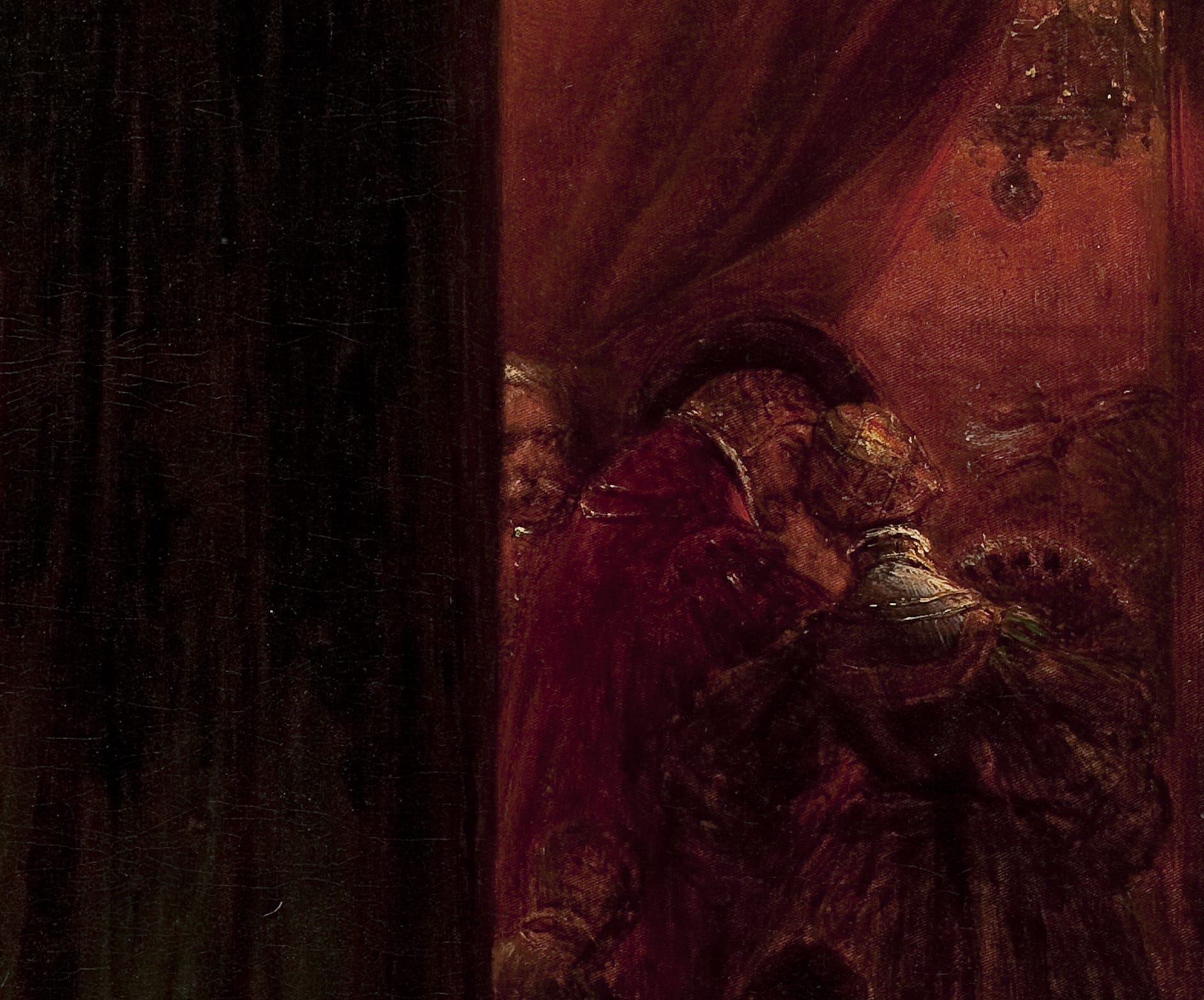
And though there is a royal ball taking place through that doorway behind him - where, no doubt, he has been employed as entertainer to his adoring fans - clearly, he is no longer feeling in the mood to head out there again.
Instead, he has collapsed onto a chair in this dressing room, completely overcome with the severity of this situation, and the sense of dread for what may happen now.
Does this mean his home has been destroyed?
Does this mean his loved ones have all been killed?
Does this mean that he must go out into the party and tell his royal employers the bad news too? Or, more likely, does it actually mean that most of them already knew of this situation anyway - but have chosen to continue on with their own celebration anyway, without a single care for the lives of ordinary people?
_
Frankly, all possible interpretations are open here given the sheer depth of emotion on our jesters face.
But rest assured, we do not necessarily even need all that full historical context in order to still be deeply moved by this work.
For its painterly quality - with all the textures, and details, and dramatic shades of red contrasting with the smoky dark surroundings - it really is utterly spellbinding.
And as a kind of psychological study - we have a figure who seems to embody so much of what Friedrich Nietszche meant when he once spoke about “Staring so long into the Abyss, that the abyss starts to stare back at us”
_
After all, this is our great showman - so famous, so revered, so accustomed to revelling in attention - now choosing to isolate himself from the masses.
This is a man who has devoted his life to comedy and joviality - now meditating on something that really could not be more serious.
And we can imagine that in these stolen moments of just sitting and brooding, all the noise of the evening has died away for Stańczyk - leaving him only with these thoughts of how the whole spectacle going on outside of his room at that very moment really is quite vain and repulsive given the circumstances.
_
But of course, Matejko leaves us with no hint as to what our Jester might do from now, or how this story goes on from here.
Thus, we are left only to wonder for ourselves . . .
Will Stańczyk pick himself up, dust himself down, paint a false smile back on his face, and head back out into the party again, to pretend that everything is ok?
Or will it be impossible for him to continue in this charade now? And if he cannot confront his employers about the situation directly, will he be tempted to simply run from this place instead . . .perhaps escaping through that window to the side, where the stars are shining?
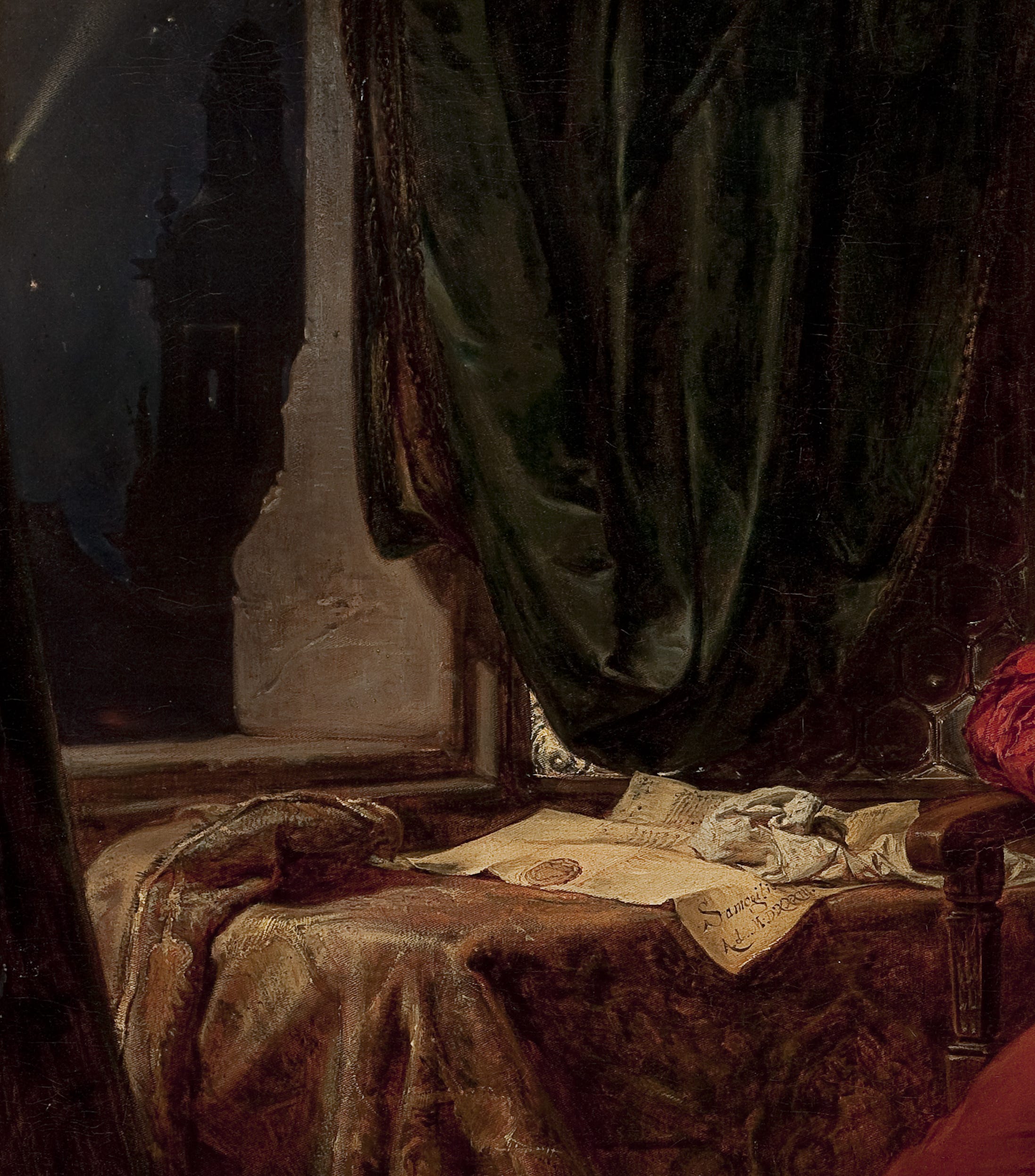
I would never have noticed all those glorious details you highlighted, George. Thank you for yet another wonderful and enlightening post about a new-to-me artist.
I am also seeing a meteor or comet in the window, which may be a bad omen. The anxiety and helplessness in his face, especially in his eyes, are captured perfectly.